Jet Lagged 001: Saigon (HCMC), VN
Notes from a rough landing
Dez · Sep 11, 2026 · 8 min read
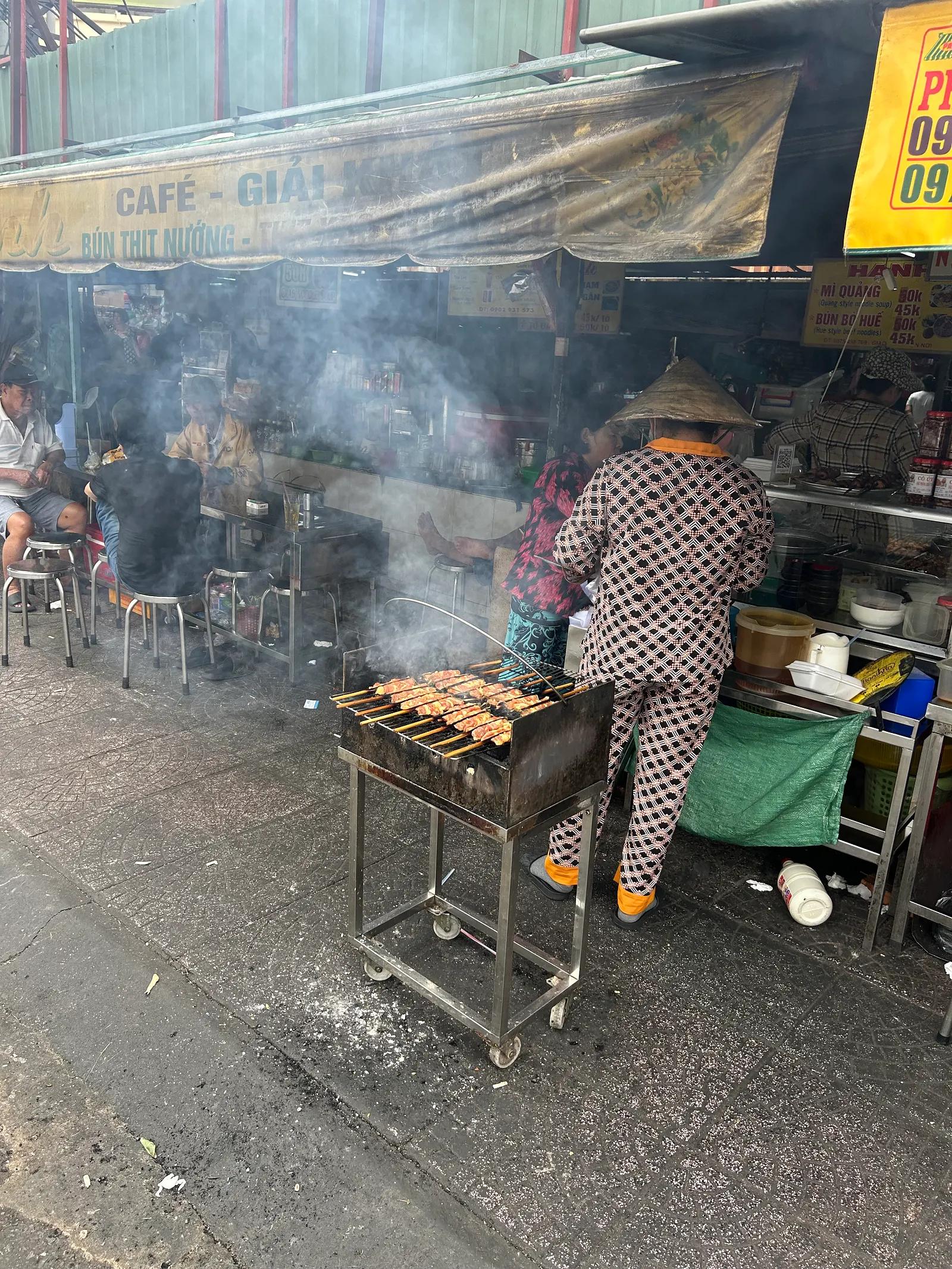
For most foreigners, Ho Chi Minh City (Saigon) is your gateway to Vietnam, the birthplace of phở, cà phê sữa đá, and bánh mì. For me, as someone who hasn’t been back in over 15 years, the city is unrecognizable. Even as a Vietnamese person, I learned many things on this trip that should be useful to you. So without further ado, here’s the rundown:
1) Airport Fast Track
For those who don’t know, fast track is a paid service that gives you expedited immigration and customs processing. You can use this service for arrivals and departures. You typically pay through WhatsApp, Klook, or GetYourGuide, and when you reach the line, someone is holding a sign with your name on it. If you hate lines or don’t want to gamble on wait times, then it is 100% worth it, and I learned this the hard way. Prices typically range from $20 USD to $80 USD depending on level or service.
- If you are arriving from an international flight around 6pm-2am, absolutely worth it
- Came in on a flight that landed at midnight, and I stood in immigration until 2am and watched all the fast-track people finish in 10 mins :(
- Other peak ARRIVAL times include 5am-8am
- For departures, typically immigration is quicker than arrivals, but peak hours are also early morning and late afternoon/evenings
- I had a departing flight around 1pm and the line was less of a nightmare compared to arrivals
It’s fair to note that if you have checked bags on arrival, there’s a chance that you still have to wait, but honestly, getting past immigration is worth the premium since you can use the restroom or sit down in baggage claim.
2) Airport taxi — Use Grab
Grab will be your best friend throughout SE Asia; if you’re wondering why it kind of looks like Uber — it used to be owned by them. Additionally, Grab offers travel passes; I highly recommend BUYING them. The included discounts outweigh the cost of travel, especially for airport rides. Once you walk out of the airport, it becomes controlled chaos, and people will try to poach you for airport transfers.
- Book on Grab
- Prices are always cheaper than metered taxis
- Reduce your chances of getting scammed
- For international arrivals, reserve your ride once you grab your bags
- The walk from baggage claim to the door is short, and pickup is just across the street
- If you’re domestic, try to walk toward international because the domestic terminal pickup is a labyrinth; your driver will thank you
- Exercise caution when getting into the right car
- Double-check the plates and car model
- I had another Grab driver try to poach me to his car even though the app did not list him, and he was persistent
It’s really hard to distinguish authentic taxis if you’re not from the area, so either having a private transfer ready or booking a Grab are your best options. An airport ride should be around $7 at most if you’re using rideshare.
XanhSM and Be are other rideshare apps which can be cheaper than Grab at times but more of a hassle if you don’t speak Vietnamese; not worth the trouble if you’re not here long term.
3) Rideshare criteria
Grab is the best way to get around, and here’s how I approached hailing one
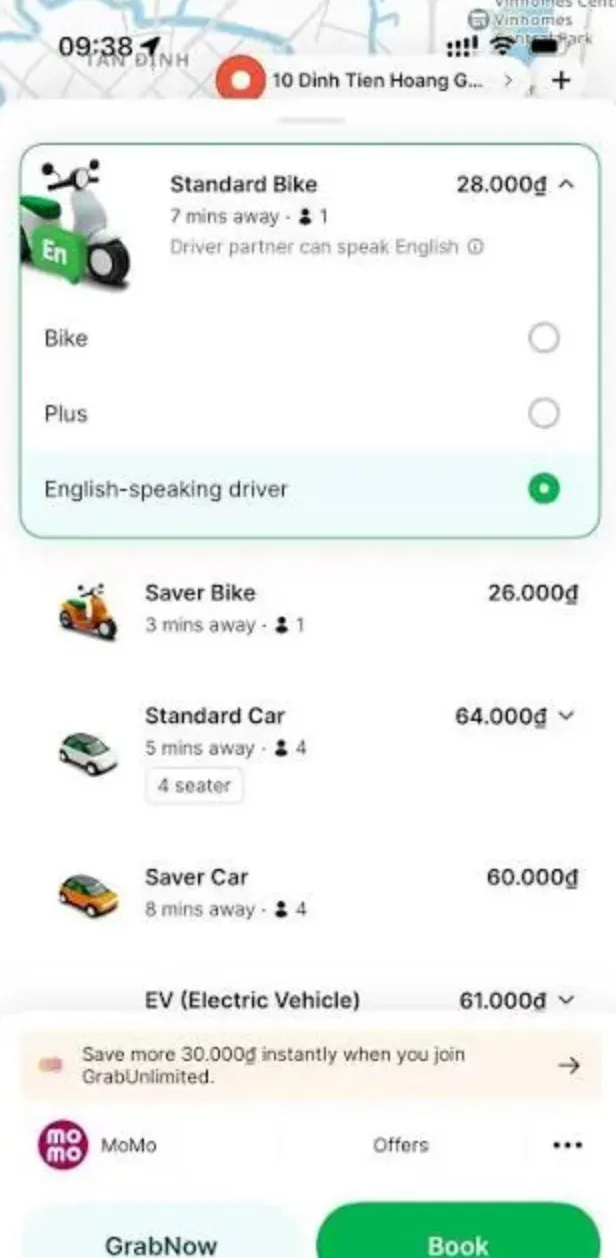
- ALWAYS CHOOSE THE BIKE OPTION
- Tons of mopeds in Saigon; you get to places faster
- The only time to use a car is to/from the airport; mopeds on city streets surround cars, and it’ll take twice as long to get to places
- Tons of mopeds in Saigon; you get to places faster
- Avoid the English-speaking bike option
- It leads to longer wait times
- Not necessary once you pick up basic phrases
- Drivers have told me it’s still 50/50 on whether the driver actually speaks English
- When to call for a Grab
- In VN, it’s disgustingly hot and humid; standing outside for more than 10 mins and your shirt starts to get soaked in sweat
- If it’s peak heat outside and I have to walk more than 4 blocks — I’m calling a Grab
- Most times it costs less than $1 to get around places, so it’s definitely worth it
- 15-minute rain rule
- Prices surge during downpours; the rain in Saigon is sporadic and typically does not last very long
- I like to hole up in a cafe or somewhere indoors for 15 minutes until the rain stops before hailing one
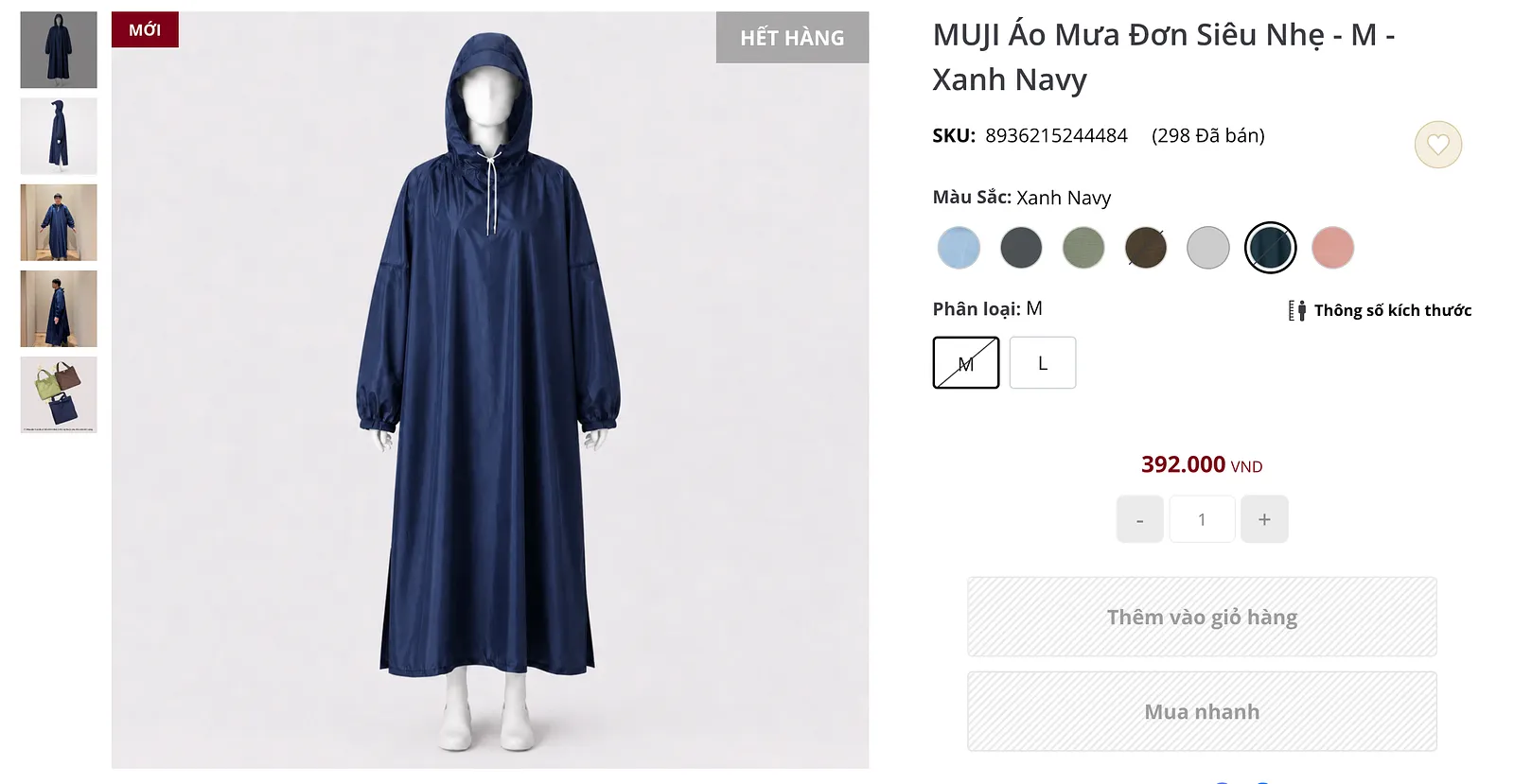
You are provided a helmet for every ride and a poncho when it rains. Your driver will pull over and hand you one to wear if it does. Alternatively, you can BYO poncho or purchase one from MUJI in District 1; they are specifically tailored for moped riders and will cover you head to toe.
4) Don’t shy away from street foods
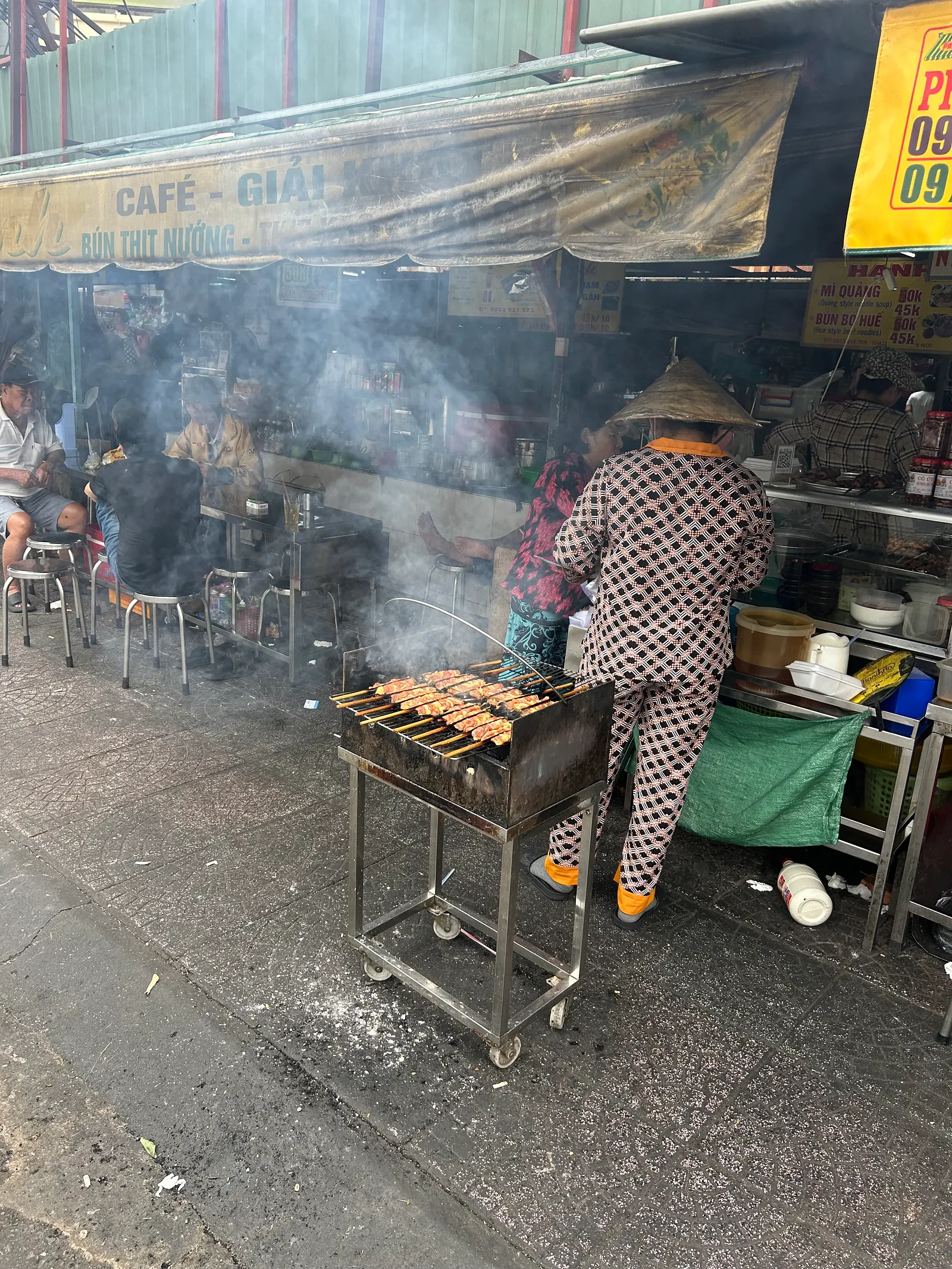
Vietnam has tons of food options readily available, whether it’s 7-11, a sit-down place with AC, or some auntie with a food cart, makeshift table, and stools. The fear of food poisoning ruining your trip is valid, but limiting yourself to indoor restaurants often means paying a huge markup, especially for common dishes sold everywhere. Street food is cheaper because of low overhead costs and lots of competition. The only way to win is by low prices and high volume.
Here’s a surefire way to avoid getting food poisoned on the street:
- Prioritize hot dishes over cold dishes
- Ex: any soup-based dishes over salad dishes
- Heat kills pathogens
- Choose high turnover stalls
- This means food is constantly being prepared, and no ingredients sit out at room temperature for too long.
- You get to witness the food preparation live, so you can tell whether something is spoiled or rotten
- Iced drinks can be a hit or miss depending on where the ice is from
- Factory-cut ice or block ice should be clear
- I haven’t encountered any establishments that use tap water to make ice, but if they do, you can easily tell if the ice is not crystal clear and is murky
- The tap water is safe enough to brush your teeth, but not for drinking
- For food delivery orders, avoid eating the raw leafy greens
- I almost got taken out by a food delivery order. My theory is that because I didn’t see how the raw vegetables were prepared, they could have been left sitting out for too long
- I typically avoid ordering any dishes that are uncooked through food delivery
- You don’t know how it was prepared, and undercooked foods increase the risk of food-borne illnesses
- If I wanted to eat these types of dishes, I would personally go out and seek them
5) Crossing the street - don’t be erratic
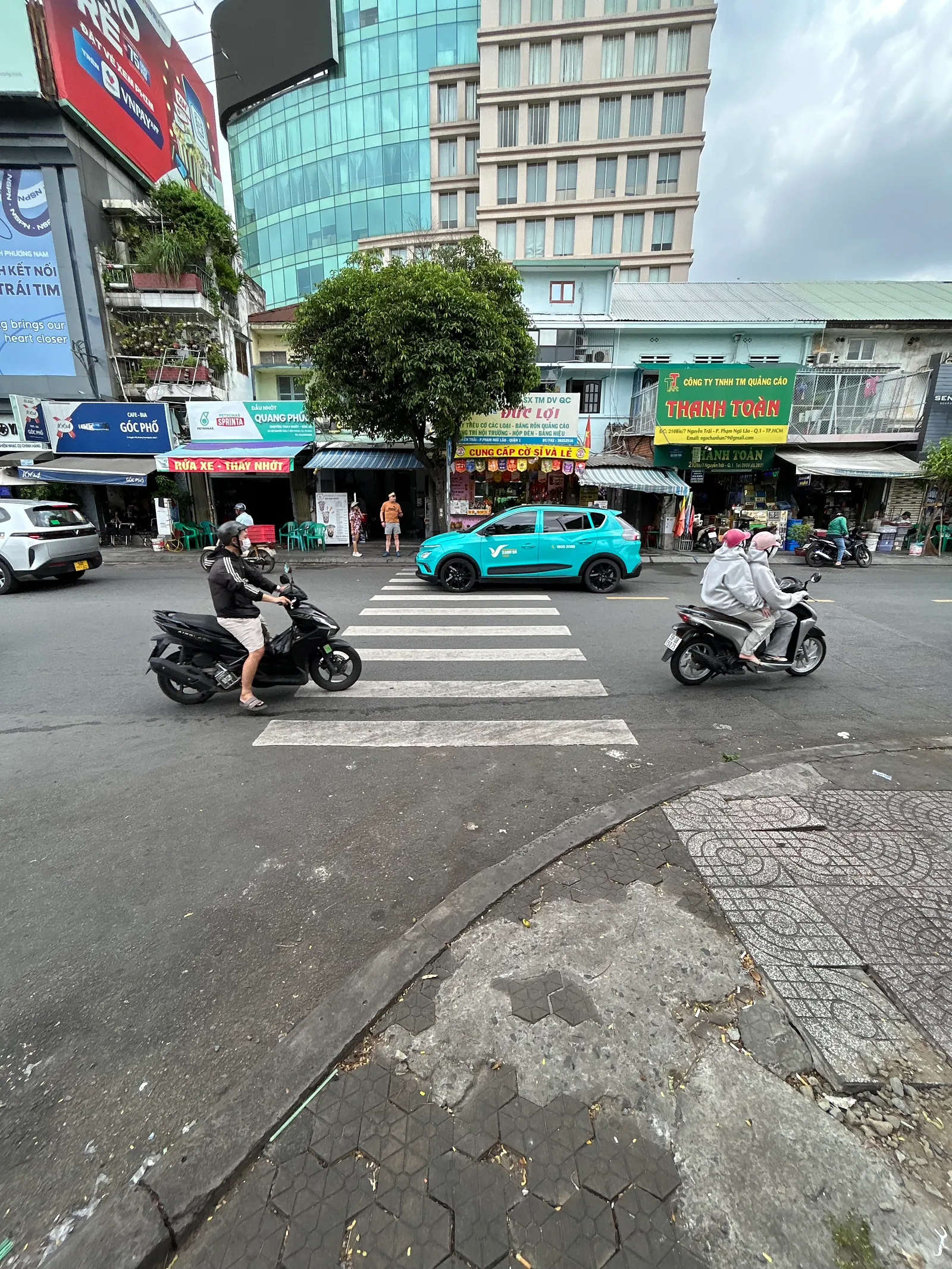
In Vietnam, road signs are there for aesthetics rather than enforcement. Some intersections have stoplights, but most don’t. Vehicles will not yield to pedestrians unless you force them to. What I mean by that is every intersection is a game of chicken when crossing. If you have ever driven in city traffic, you understand having to carve your way into different lanes. The same goes here, except you’re trying to cross the street. The secret here is not to backtrack once you enter the intersection. You have to walk with full confidence and commit. Once you see a gap in traffic, you start walking across the intersection and continue walking until you reach the other side. If a car is close and you know you won’t make it before it does, you can stand there for a few seconds. Once that car moves away, keep going immediately. Cars will stop if there is no other way to dodge you, while mopeds will drive around you regardless. Some say this is a rite of passage, but it truly is not difficult, and the more reps you get, the easier it becomes.
6) Vietnamese coffee roulette
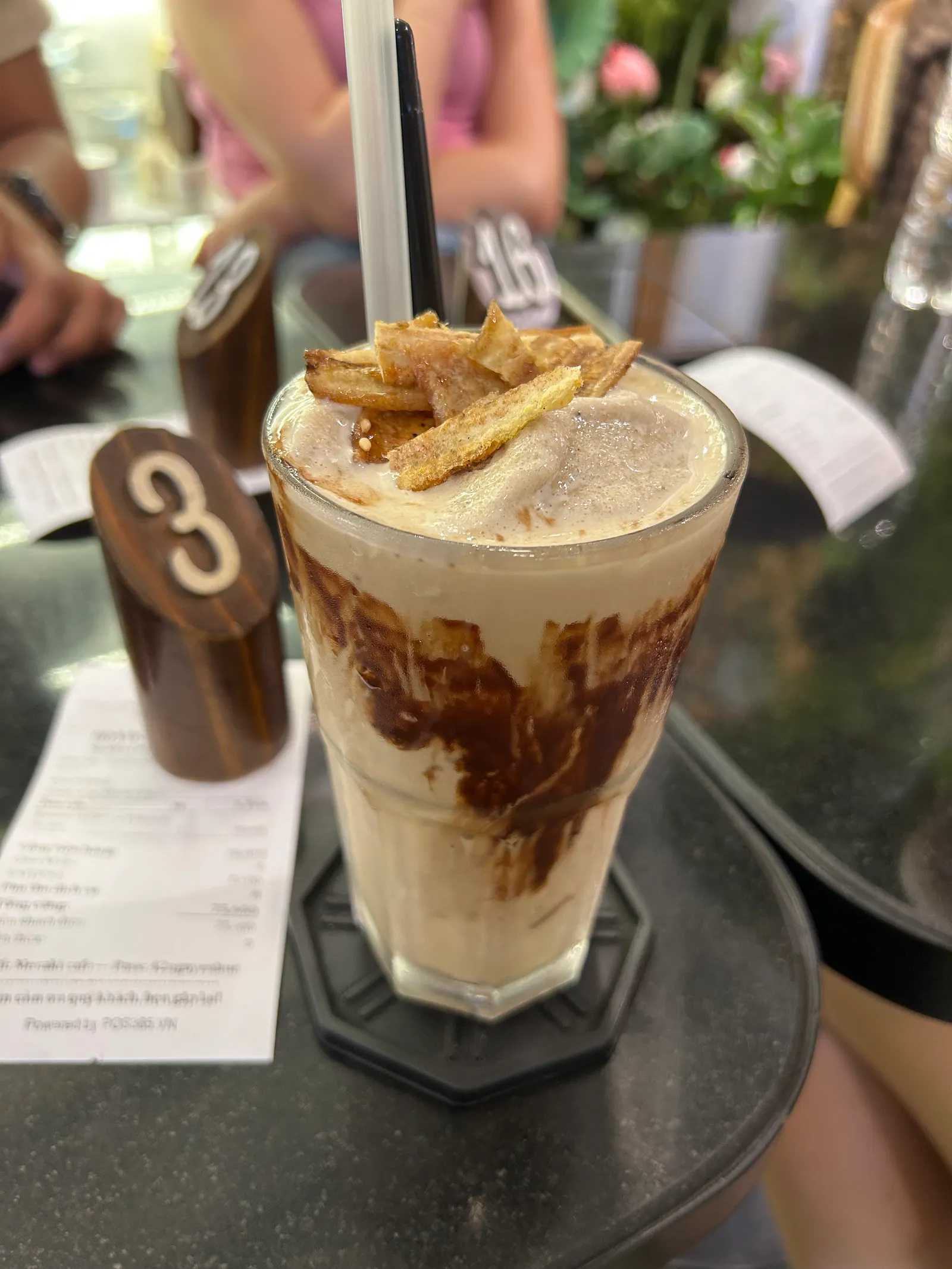
Vietnam uses robusta beans, which have 2x the caffeine of regular arabica beans, which is why Vietnamese coffee earned the nickname “crack coffee.” Coffee shops can either blend arabica and robusta or serve 100% robusta. Unfortunately, the only way you can find out is through trial and error; some coffees I drank had no effect, while others kept me energized through the heat and humidity.
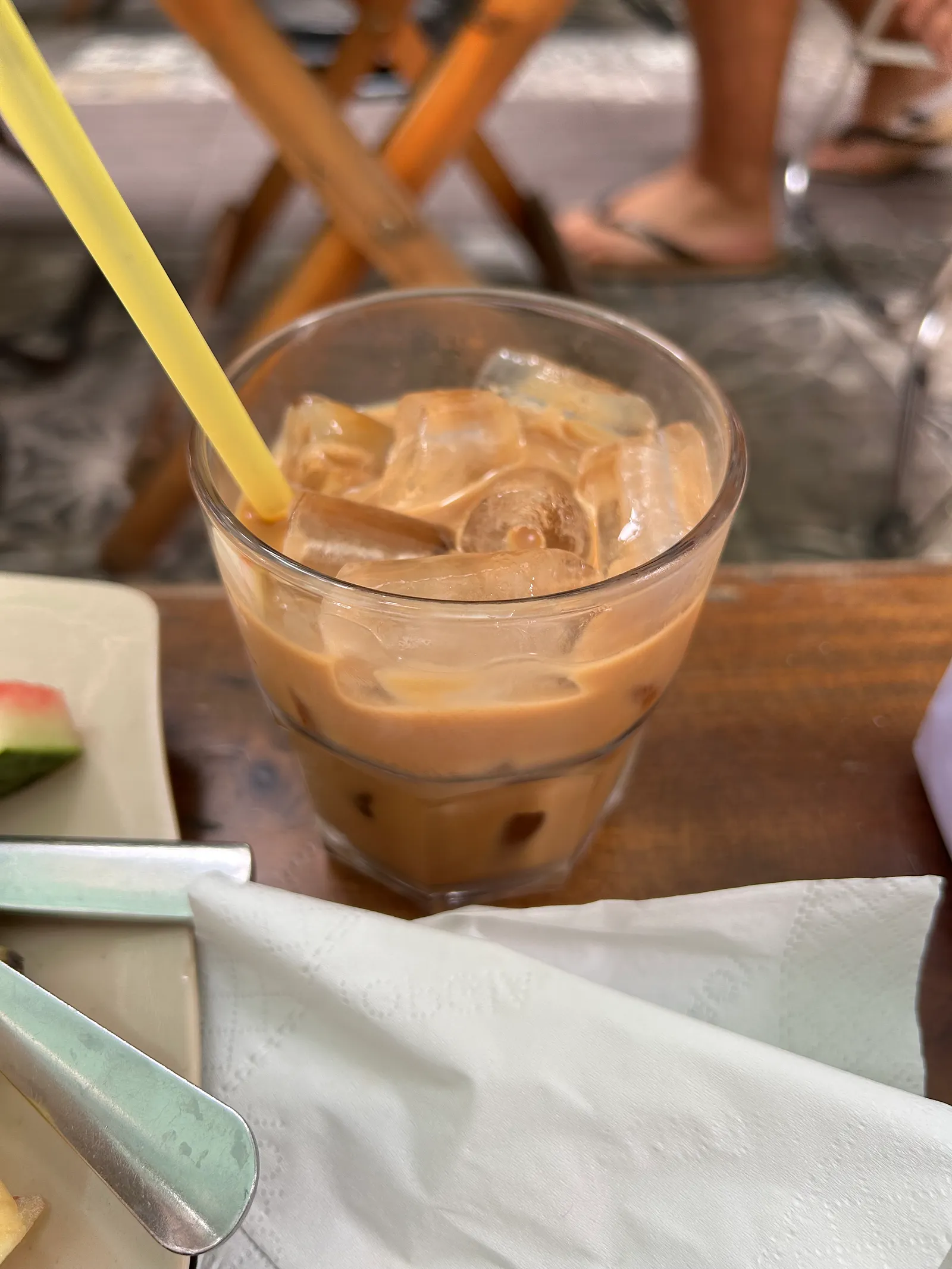
Moral of the story: not all coffee is made equally
7) Don’t rely 100% on social media for food places
The TikToks and Instagram Reels you see are just one perspective from foodies, but I can guarantee the prices there are inflated. Part of the joy of wandering around HCMC is finding hole-in-the-wall places, and that is 100x easier given how many street stalls are out there. Unless it’s a dish that’s not commonly found or you’re planning to be in that area of the city, the options nearby are just as good. Just because a place goes viral doesn’t always mean it’s good, in my experience at least.
8) Know when and how to negotiate prices
Haggling is a way of life here, but there’s a time and place for it.
AVOID negotiating in stores that have fixed prices like 7-11s, supermarkets, shopping malls, and pretty much any brick-and-mortar store. You cannot haggle at food stalls and restaurants either.
Where you can haggle are flea markets, souvenir stalls, and open-air markets- anywhere that doesn’t have a fixed price printed on a sign.
It also depends on what and who you are bargaining with; for example, if an elderly lady is on the street selling handmade products, it’s better altogether to avoid the hassle, as you could be funding their livelihood.
Typically, you would start at 30-50% of their asking price (tourist tax) and haggle from there. One trick I like to use is to propose a gamble: best of 3 rock-paper-scissors. My terms are that if I win, I get 70% off, but if I lose, I will pay 20% on top of the asking price. For me, it saves the trouble of going back and forth, and maybe it’s the gambling tendencies, but the people have never turned down my proposal once.
These are just the surface-level things that I’ve noticed or experienced, things that I wish I knew before coming to HCMC. Coming back to Vietnam was an eye-opening experience that raised a lot of internal questions I’m still reflecting on, so I’ll save them for another post. I strongly felt that 3-4 days is enough time in the city, even for shopping. If you have more than a week or two, I highly recommend checking out the whole country and traveling to cities like Hanoi and its surrounding areas or central Vietnam (Hoi An, Da Nang, Hue)
Originally published on Substack.
More from the blog
Oct 20, 20269 min readSubscribers
Points maxxing
A little glimpse into how I operate and spontaneously full send on trips without ever worrying about budget
Sep 10, 20261 min read
Hyatt x Delta Airlines partnership
And a farewell to American Airlines I guess
Sep 8, 20264 min readSubscribers
United expert mode
If anyone ever mentions this, just know that they are locked in on award travel